 |
U.S Afghanistan Iran International |
 |
 |
|
Auctioning Afghanistan`s Mines; Taliban Earn 14 Million Afghanis from Gemstone Sales in a Single Day
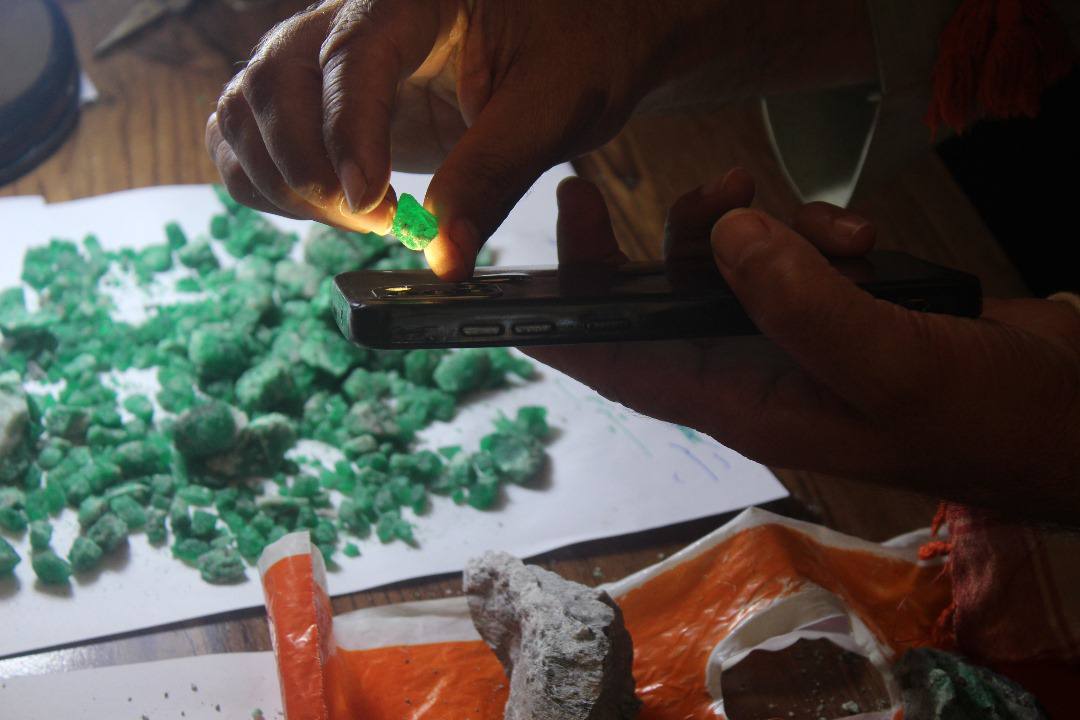
The extraction of Afghanistan`s mines and underground resources under Taliban administration is proceeding at an intense pace-a situation critics describe as the plundering of Afghanistan`s wealth. It appears the Taliban are seeking to finance themselves through the country`s mineral resources. The group does not publish reports detailing its revenues or how its budget is spent. What is evident, however, is that the Taliban`s unaccounted revenues from Afghanistan`s mines are substantial, while poverty and unemployment remain widespread and half of the country`s population depends on humanitarian assistance. According to Ansar Press, published figures indicate that on Tuesday alone, in just three provinces, the Taliban generated more than 14 million Afghanis solely from the sale of precious and semi-precious stones. Local Taliban officials in Nuristan reported that 11,687 kilograms of precious and semi-precious stones, valued at 113,569,000 Afghanis, were sold. The Taliban`s head of mines in Nuristan stated that the stones included kunzite, beryl, crystal, and morganite, extracted from the Mawi mines in the Du Ab district. Of the total sales, 11,356,000 Afghanis were deposited into the Taliban administration`s treasury. In neighboring Kunar province, beryl worth 22 million Afghanis was also sold yesterday. Abdul Ghani Musamim, spokesperson for the Taliban governor in Kunar, announced that the total weight of the stones sold was 474 kilograms. He said the stones were auctioned for 22.3 million Afghanis, from which 2.2 million Afghanis were transferred to the Taliban`s revenue treasury. The Taliban`s Directorate of Mines and Petroleum in Panjshir likewise reported the sale of 7,513 carats of emerald extracted from the province`s mines. This quantity was sold at auction for 6,759,671 Afghanis. The Taliban collect a 10 percent royalty on emerald sales; accordingly, their revenue from yesterday`s sale exceeded 675,000 Afghanis. The sale of these few categories of gemstones represents only a portion of Afghanistan`s mineral resources. Precious and Semi-Precious Stones Afghanistan possesses 17 types of rare minerals with an estimated volume of 1.4 million tons. Historically, the country has been the primary source of lapis lazuli-a deep-blue semi-precious stone extracted from Badakhshan. Rubies and emeralds are also found in Badakhshan and Panjshir provinces, though their estimated quantities remain undetermined. Herat marble, considered among the world`s finest decorative stones, is primarily located in the Chisht district of Herat province. Afghanistan`s talc is globally renowned for its high grade. Its principal use is in the production of baby powder, and the largest talc mine is located in Nangarhar province in the east. It is reported that nearly all Afghan talc is exported to Pakistan. Unregulated Gold Extraction In addition to gemstones, the extraction of precious metals, including gold, continues under Taliban control. Afghanistan`s gold reserves are estimated at approximately 2,700 kilograms, valued at roughly $170 million. Significant gold mines are reportedly located in Badakhshan and Takhar provinces in the northeast, in Ghazni, in Hesarak district of Logar province, in the Zarkashan area of Qalat in Zabul province, and in the Qaradaghan region of Baghlan province. Currently, gold extraction is proceeding extensively in Badakhshan and Takhar. The Taliban Ministry of Mines and Petroleum claims that more than 100,000 people in Badakhshan are directly and indirectly engaged in gold panning. According to the ministry, extraction is underway in the districts of Shahr-e Bozorg, Yawan, Kohistan, Raghistan, Khwahan, and Arghanjkhah in Badakhshan. Reports indicate that the Taliban have granted gold mining concessions in Badakhshan and Takhar to Chinese companies, which are allegedly conducting extensive extraction operations. This large-scale extraction has raised concerns among experts and sparked public protests. Najibullah Sadid, a water resources researcher, has stated that the Panj River-on the border between Afghanistan and Tajikistan-has shifted its course toward Tajikistan due to excavation for gold extraction. In a post on X, he wrote that Afghanistan is paying a heavy environmental price for gold mining in the Panj River. He described the environmental destruction as "severe," adding that the river, once marking the boundary between Afghanistan and Tajikistan, has in some areas entirely shifted toward Tajikistan as a result of massive mining excavations. Recently, residents of the Samti Chah Ab area in Takhar protested excessive gold mining and the damage caused by excavation to water resources. Their protest was reportedly suppressed by the Taliban, and three protesters were killed. Oil Extraction in Afghanistan The Taliban have also handed Afghanistan`s oil fields to private companies for extraction. According to a 2019 official report by Afghanistan`s Ministry of Mines, the country`s oil fields and wells are estimated to contain approximately 1.6 billion barrels of crude oil, 16 trillion cubic feet of natural gas, and 500 million barrels of gas liquids. The crude oil alone is valued at around $107 billion. Most of Afghanistan`s oil fields are located in the north. Sar-e Pol and Faryab provinces host three oil fields-Qashqari, Bazar Kami, and Zamard Sai-with officially confirmed reserves estimated at around 87 million barrels. Natural gas reserves are located in the Khwaja Gogerdak, Yatim Taq, Khwaja Bolan, and Jarquduq areas of Jawzjan province, as well as parts of Balkh and Sar-e Pol provinces. In 2023, the Taliban signed a 25-year contract with a Chinese company to extract oil from the Amu Darya basin. However, in the month of Jawza of the current solar year, they terminated the contract, citing repeated contractual violations. The Amu Darya basin, covering approximately 4,500 square kilometers across parts of Sar-e Pol, Jawzjan, and Faryab provinces, is considered one of Afghanistan`s largest oil zones. Under the terms of the agreement, the Chinese company had committed to investing $150 million in the first year and $540 million over the subsequent three years. Despite the cancellation of the contract, the Taliban have announced several crude oil sales this year valued in the tens of millions of dollars. On at least two occasions, crude oil worth $15 million was sold. Salt Mining The Taliban have also initiated extraction of Afghanistan`s salt mines. They granted a 15-year, $24 million contract to a private company for the extraction of three salt mines in Dasht-e Laili, Qormaqol district of Faryab province. According to the Taliban, Afghanistan requires 300,000 tons of salt annually; if Faryab`s mines are properly extracted, domestic demand could be met. Coal Extraction According to the Taliban Ministry of Mines and Petroleum, 80 areas across the country contain coal mines, and extraction is currently ongoing in 17 of them. The Dara-e Suf district in Samangan province is considered one of the country`s most significant coal reserves. Large coal mines also exist in Sar-e Pol, Baghlan, Bamiyan, and Herat. Coal has no major industrial application in Afghanistan and is primarily used by households for heating during winter. In addition to domestic use, Afghan coal is exported. Pakistan is the principal buyer of Afghan coal. Reports indicate that coal extraction and exports have increased since the Taliban returned to power. The Taliban earn revenue both from coal extraction and from export tariffs. In late 1401 (solar year), the Taliban Ministry of Finance announced an increase in customs revenues from coal exports to Pakistan. The ministry reported that in the first ten months of 1401, it generated 12.143 billion Afghanis (approximately $136.4 million) in customs revenue. In 1400, prior to the Taliban takeover, coal export tariff revenues amounted to 1.893 billion Afghanis. Lead and Zinc Extraction The Taliban have also awarded lead and zinc mines in Bamiyan, Herat, and Kandahar provinces to companies for extraction. Recently, the Taliban Ministry of Mines and Petroleum announced that 14,070 tons of lead and zinc from Bamiyan province were sold through a bidding process to a private company. Last year, the ministry reported the sale of 1,460.64 tons of lead and zinc extracted from the "Bibi Gohar" mine in Khakrez district of Kandahar. Two years ago, the Taliban also announced the commencement of extraction at the "Zard Alogak" lead and zinc mine in Adraskan district of Herat. Trillions in Wealth Beneath the Feet of the Hungry Afghanistan is rich in natural resources and minerals. According to a 2010 estimate, the value of the country`s natural reserves reaches up to $3 trillion. Yet Afghanistan has thus far failed to effectively benefit from these resources. Over the past four years under Taliban rule, mining operations have expanded significantly, but there has been no improvement in public welfare or the national economy. Poverty and unemployment remain pervasive. According to the United Nations Office for the Coordination of Humanitarian Affairs (OCHA), 21.9 million people in Afghanistan require humanitarian assistance this year. OCHA has stated that humanitarian agencies have prioritized assistance to 17.5 million people and require $1.72 billion in funding to support them. Last year, humanitarian organizations repeatedly complained of severe funding shortfalls and said they were forced to remove millions of vulnerable Afghans from aid distribution lists.
|
 |
|
|
|
U.S
Afghanistan
Iran
International
Social
Economic
Articles |
Athletic
Read
Science
Medical
Interview
Art and Culture
Travel |
|