 |
U.S Afghanistan Iran International |
 |
 |
|
The US economy needs international students now more than ever
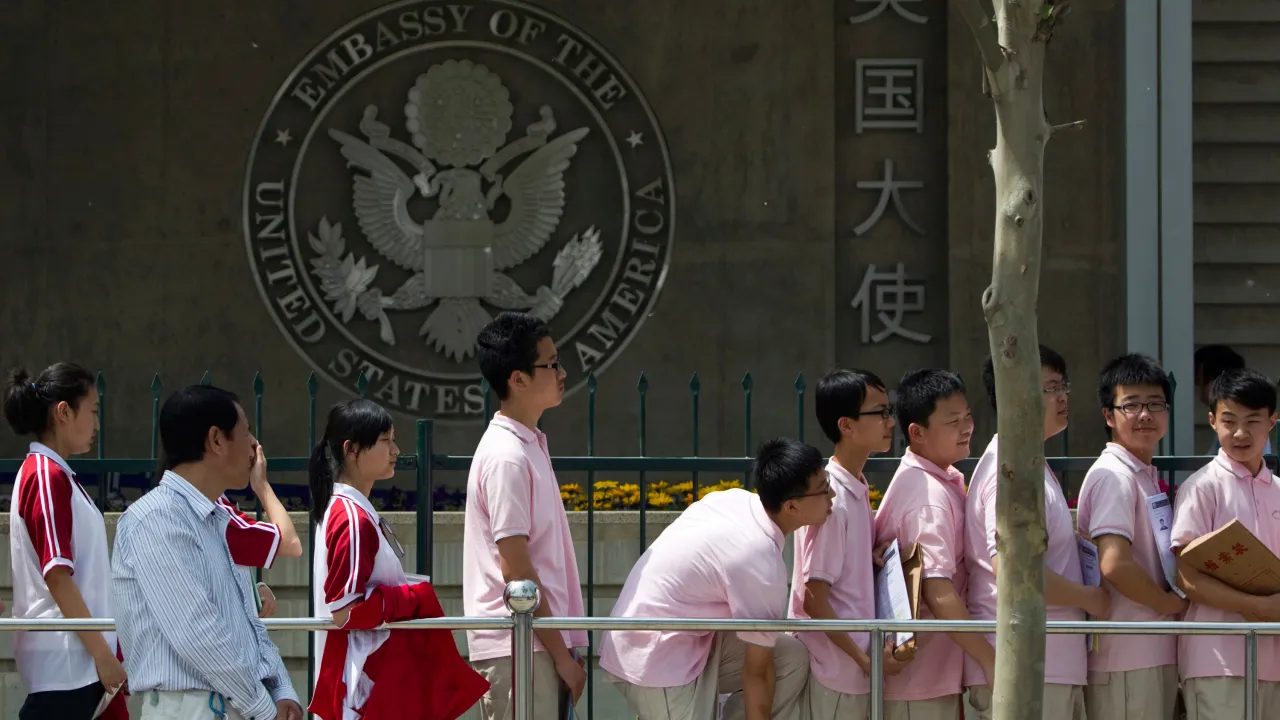
This is the season when high school seniors around the world are making one of the biggest decisions of their lives: where to go to college. For students outside the U.S., that dream has often led to America. For decades, the U.S. has been the top destination for international students - a global magnet for talent, innovation and ambition. America`s universities, from community colleges to the Ivy League, attracted more than 1.1 million international students last year. They came not just to earn degrees, but to join a community of discovery that shaped everything from Silicon Valley start-ups to cancer research labs. But that era of attraction is fading fast. According to a recent New York Times analysis, the number of international students arriving in the U.S. this August dropped by nearly 20 percent compared with last year - the steepest decline on record outside of the pandemic. Universities are already feeling the shockwaves. Niagara University in western New York reported a 45 percent drop in international enrollment this fall. DePaul University in Chicago saw a 62 percent decline in new international graduate students. Even flagship public institutions like the University of Wisconsin-Madison have seen their international freshman numbers fall by more than 35 percent. This is not a fluke or the result of shifting demographics - it is Trump administration policy. The Trump administration has taken a series of steps that makes studying in the U.S. harder. These include new layers of "social media vetting" and the revocation of student visas for political speech deemed controversial. The administration is also proposing to end "duration of status," which has allowed students to remain in the U.S. for the length of their studies without repeatedly applying for extensions. And President Trump has imposed a $100,000 fee for certain H-1B visa petitions, the work visas many international graduates rely on to stay and contribute after earning their degrees. It`s little wonder that students abroad are rethinking the American dream. Last year, international students contributed over $43 billion to the U.S. economy and supported more than 375,000 jobs. Their tuition dollars help sustain universities in towns and cities across the country, where the local economies depend on student spending. The Association of International Educators projects that if current trends continue, the U.S. could lose up to $7 billion in revenue and 60,000 jobs tied to international education this year. Moreover, a new white paper commissioned by the National Academies of Science, Engineering, and Medicine explored how current and proposed U.S. immigration restrictions will affect the science, technology, engineering and mathematics workforce and economic growth in the U.S. The study found that GDP losses could reach $240 to $481 billion annually after a decade of restrictions on international students. International students don`t take jobs from Americans; they create them. A study by the National Foundation for American Policy found that on average, one H-1B technology worker creates five U.S. jobs. That is not surprising. Immigrants fuel innovation. Forty percent of Nobel Prizes awarded to Americans in chemistry, medicine, and physics since 2000 have gone to immigrants - many of whom began as international students. Roughly half of all U.S. startups valued at over $1 billion have at least one immigrant founder. In other words, by making it harder for international students to work here after they graduate, the U.S. is not protecting its interests - it`s shooting itself in the foot. Meanwhile, other countries are rolling out the welcome mat. Canada, Australia and the U.K. have expanded post-graduation work rights and streamlined visa processes. Germany, Ireland and the Netherlands now actively recruit international students with English-language degree programs and pathways to residency. The global competition for talent is fierce, and America is ceding ground. This decline is not inevitable. Congress, the administration and courts could act to reverse it. The State Department could prioritize visa processing for students and exchange visitors, ensuring timely appointments and decisions. The administration could lift travel restrictions that block students from 19 countries, while maintaining rigorous vetting. Lawmakers could reaffirm the principle of "duration of status," providing stability and predictability for both students and universities. And courts could strike down the $100,000 H-1B fee as exceeding President Trump`s authority. Universities and companies also have a role to play. When the Trump administration recently considered sending troops to San Francisco, pressure from the tech sector shot down the proposal. A similar coalition of universities, technology companies and local chambers of commerce could help persuade policymakers that international students are an asset, not a threat.The U.S. has long prided itself on being a place where talent from anywhere in the world can thrive. If that promise fades, so will our economy. Every fall, millions of students around the world look at their options. They see Canada`s efficiency, Britain`s clarity and Australia`s openness. Increasingly, they see America`s storm clouds. The question for policymakers is simple: Do we still want to be the world`s top destination for talent-or are we content to watch it go elsewhere? Because if we continue down the current path, the next Einstein, the next Sergey Brin or the next Elon Musk might just take their talent somewhere else. Stephen Yale-Loehr is a retired professor of immigration practice at Cornell Law School.
|
 |
|
|
U.S
Afghanistan
Iran
International
Social
Economic
Articles |
Athletic
Read
Science
Medical
Interview
Art and Culture
Travel |
|