 |
U.S Afghanistan Iran International |
 |
 |
|
America’s military has an Iranian drone problem
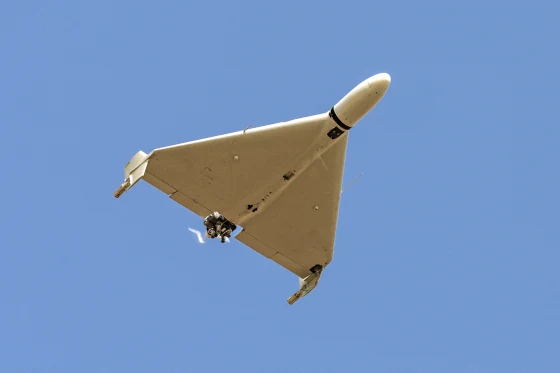
The U.S. military and its allies across the Middle East are struggling to combat Iran`s swarms of cheap attack drones as the war enters its second week. Pentagon officials this past week reportedly conceded in closed-door briefings with lawmakers that waves of Iranian-launched drones are punching through air defenses, leaving American troops and bases in the Persian Gulf region vulnerable to attacks. Dozens Americans have already been killed in a drone strike. To combat Iran`s Shahed 136 drones - a relatively inexpensive weapon that costs around $20,000 to quickly produce - America`s armed forces are bleeding costly Patriot and THAAD interceptors that take years and millions of dollars to build. US President Trump on Friday met with major defense contractors - including Lockheed Martin, the maker of THAAD, and Raytheon, which produces Patriots - during which he claimed they agreed to quadruple production of so-called exquisite class weaponry. But even with a ramped-up building schedule, such weapons can take up to two years to finish, with defense experts warning the Iranian drone attacks could disrupt the Persian Gulf region for weeks into months and drain American ammunition stockpiles. "Iran`s strategy is premised upon sending cheap drones that the U.S. needs to shoot down with expensive interceptors," said Colin Clarke, the executive director of the Soufan Center. "Tehran is attempting to pursue a strategy of `death by a thousand paper cuts` to bleed U.S. and Israeli defenses." Brett Velicovich, a former Army intelligence special operations soldier who has worked with Ukraine`s drone forces in its defense against Russia, said he and other drone experts have been warning the U.S. to prepare for drone warfare for years. "We`ve been on the ground in Ukraine and have seen how drone warfare has evolved," he told The Hill. He said the U.S. federal contracting system is not built for rapid innovation, a reality that Defense Secretary Pete Hegseth confronted last year when he announced an initiative to cut red tape and ramp up incentives around military drone innovation. "It hasn`t changed fast enough and we have legacy outdated systems protecting our embassies," Velicovich said. "Our counter drone systems need work." Since the U.S. and Israel launched a war against Iran last week, Tehran has launched more than 1,500 drones in addition to hundreds of missiles at nearby Persian Gulf states allied with Washington or housing American troops. Most were intercepted by air defenses, but six U.S. service members were killed in a drone strike in Kuwait on March 1. The U.S. Embassy in Saudi Arabia was also attacked via drones. On Tuesday, Hegseth and Joint Chiefs of Staff Chair Gen. Dan Caine told lawmakers that the attack drones are posing a bigger problem than anticipated and that U.S. air defenses will not be able to intercept them all, CNN reported. Caine earlier on Monday told reporters that Iranian drones pose a threat but did not say how many had been shot down, only saying that "our systems have proven effective in countering these platforms, engaging targets rapidly." U.S. Central Command (Centcom) Adm. Brad Cooper said Thursday that drone attacks have decreased by 83 percent since day one, but added U.S. forces "remain vigilant." Asked if the U.S. has asked for specific capabilities to deal with the drones, Cooper would only say the military has "made those appropriate adjustments." He also appeared to downplay concerns the U.S. munitions stockpiles were quickly dwindling, as Washington is fielding "a number of new capabilities" in the war. "If I just walk back a couple of years, you remember you used to always hear, ‘we`re shooting down a $50,000 drone with a $2 million missile.` These days, we`re spending a lot of time shooting down $100,000 drones with $10,000 weapons," he told reporters at Centcom headquarters in Florida. Yet the issue has been so prevalent that Ukrainian President Volodymyr Zelensky on Wednesday announced his country is sending some of its military specialists to the Middle East to help counter Iranian drones. The Persian Gulf countries "face a serious challenge and speak openly about it: Iranian attack drones are the same ‘shaheds` that have been striking our cities, villages, and our Ukrainian infrastructure throughout this war," he said. Kelly Grieco, a senior fellow at the Stimson Center think tank, raised skepticism over the idea that the Pentagon didn`t foresee the drone threat. "It`s worth saying that the notion the U.S. military couldn`t have predicted this threat begs belief given that it was well known about Iranians` Shahed threat," she said. "And we`ve had four years of watching Ukraine deal with Iranian drones and Russian-made variants of them in attacks, so this shouldn`t have come as a surprise." The Shahed, which Moscow has bought in bulk from Tehran, can fly low and slow, making it easier to evade air defenses compared to missiles. They`re also cheap to make and can be churned out quickly. Even as U.S.-Israeli strikes have dropped dozens of bombs on Iranian ballistic missile launchers and struck the country`s equivalent of Space Command, Iran`s drone production line is difficult to wipe out as they can be assembled nearly anywhere, according to Grieco. "The problem with these Shahed drones is that you can much more widely disperse production, so it`s much harder to identify even where production might be," she told The Hill. "You could assemble a Shahed drone in your garage. ... It means it`s going to make it a lot harder to hunt and destroy these." Attacks can also come from Iranian proxies, including the Houthis in Yemen, where Tehran moved a lot of drones, according to Velicovich. "It`s highly probable there are some secret production sites around the Middle East we don`t know about," he said. Cooper said a drone carrier was among more than two dozen ships it had hit in the first week of the war. Open source estimates show the Iranians have upward of 70,000 drones to launch across the Persian Gulf, though Grieco said that number seemed a bit high. Still, considering the Iranians have launched less than 2,000 in the first week of the war, it`s conceivable Tehran can keep up drone attacks for months, she said. "You see this pattern of data - and I assume it`s replicated across other Gulf states - is the first day there was a large barrage of ballistic missiles at the UAE [United Arab Emirates], over 500 in the first day. And then thereafter it dropped down to somewhere between about 130 to 150 a day," she said. "To me, that drop-down is reflective of probably more of a strategy choice of trying to be able to sustain that in the long term."
|
 |
|
|
U.S
Afghanistan
Iran
International
Social
Economic
Articles |
Athletic
Read
Science
Medical
Interview
Art and Culture
Travel |
|