The Disgraceful Silence of Former Afghan Politicians in the Face of Pakistan’s Aggression
2025/10/18-18:58
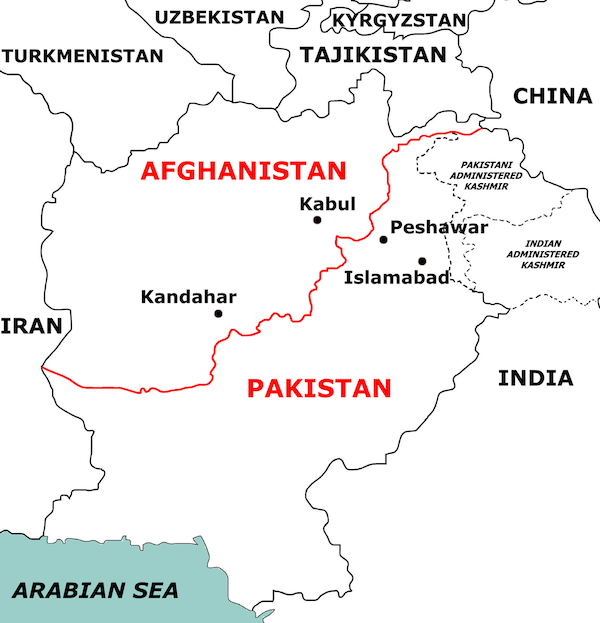
In recent days, the Afghanistan-Pakistan border has witnessed intense military clashes between Taliban forces and the Pakistani army. What began with Pakistan`s initial airstrikes near Kabul soon escalated into a series of Taliban attacks on Pakistani border posts, followed by further Pakistani air and ground offensives inside Afghan territory. Reports indicate that dozens of people - including civilians, women, children, and even athletes - have been killed. Despite the announcement of a temporary ceasefire, violence has continued, prompting emergency talks in Doha, Qatar.
This crisis not only threatens regional stability but also underscores once again the deeply troubled and complex relationship between the two neighboring countries. Pakistan accuses the Taliban of harboring militants from the Tehrik-i-Taliban Pakistan (TTP), while the Taliban reject the allegations and describe Pakistan`s actions as a clear violation of Afghanistan`s sovereignty.
The Telling Silence of the Former Republic Politicians
The reaction - or rather, the lack of it - from former Afghan politicians of the Republic era, most of whom now live abroad, is deeply revealing. Many of these figures once claimed to be defenders of Afghanistan`s national interests, yet in the face of this major crisis, they have chosen silence.
This silence does not merely expose their political weakness - it also hints at the shadow of their long-standing and secret relationships with Pakistan`s powerful intelligence agency, the ISI. Having benefited for years from Pakistan`s covert support, they now appear unwilling to jeopardize those ties by condemning Islamabad`s attacks. On the other hand, if they were to side against the Taliban, they fear being branded by the Afghan public as "Pakistan`s puppets," further tarnishing their already fragile reputations. Caught between these two risks, they have chosen the path of disgraceful silence - a silence that serves no one but their own political survival and makes them even more despised among the Afghan people.
Divergent Voices Amid Silence
Still, a few figures have spoken out, though their positions differ. Former President Hamid Karzai strongly condemned Pakistan`s attacks, calling them a "blatant act of aggression" and a violation of international law. Karzai urged Islamabad to immediately halt its strikes and reconsider its policies toward Afghanistan, warning that such actions would only empower extremist groups further.
Karzai`s statement - particularly significant given his historically conciliatory approach toward Pakistan - reflects his growing concern over the deteriorating situation.
In contrast, former MP and women`s rights activist Fawzia Koofi took a different stance. She described the conflict as "the Taliban`s war," emphasizing that it has nothing to do with the Afghan people. Koofi condemned the Taliban for their destructive policies and for leading the country toward collapse. Her position, while politically understandable from an anti-Taliban perspective, effectively distances the Afghan public from the issue - and in practice, it inadvertently aligns with Pakistan`s interests, a state that has long used extremist groups as instruments of influence in Afghanistan.
The Broader Silence of Key Leaders
But why have other prominent figures - such as former President Ashraf Ghani, former Chief Executive Abdullah Abdullah, former Vice President Amrullah Saleh, or leaders of parties like Jamiat-e Islami and Hezb-e Wahdat - remained silent? None have made any official public statements regarding this crisis.
Except for Abdullah, most of these politicians live abroad, with full access to international media and social platforms, yet they have chosen not to speak. This silence likely stems from fear - fear that their past links with Pakistan`s ISI might be exposed. Many of them rose to power with Pakistan`s covert backing and now prefer not to antagonize Islamabad. Conversely, condemning the Taliban could lead the Afghan public to label them as self-serving opportunists who once collaborated with Pakistan for personal gain.
This moral paralysis has left them trapped between two unacceptable options:
If they oppose the Taliban, they risk being branded as Pakistan`s loyal servants.
If they condemn Pakistan, the ISI could expose their past dealings and compromise their reputations further.
Thus, they have chosen a third path - a path of shameful silence, born not of wisdom but of fear and dependency.
Taliban: Illegitimate, Yet Afghan
Of course, none of this justifies the Taliban`s conduct. There is no doubt that the Taliban lack both domestic and international legitimacy. They rule through coercion and violence, suppress women, silence the media, and eliminate political dissent. The Taliban do not represent the Afghan people - they represent the continuation of their suffering.
Yet, despite their illegitimacy, the Taliban are still part of Afghanistan`s reality - they are Afghans. The land being bombed by Pakistan is Afghan soil, not Taliban soil. Any foreign aggression against Afghanistan, regardless of the pretext, is an attack on the nation`s sovereignty and territorial integrity. No moral or political conscience can remain indifferent to such an act.
A Test of Integrity and Patriotism
More than ever, Afghanistan today needs a united national voice - a voice that stands against foreign aggression without being seen as a defense of the Taliban. Condemning Pakistan`s attacks does not mean legitimizing the Taliban; it means defending the land and people of Afghanistan.
History will not forget the silence of these politicians. Those who once preached patriotism and now remain mute in the face of foreign invasion will not be remembered as "leaders of the Republic," but rather as exiled politicians who, even in safety abroad, lacked the courage to defend their homeland.