 |
U.S Afghanistan Iran International |
 |
 |
|
In a 400,000-year-old hearth, hints of humans taming fire earlier than thought
Researchers say they’ve uncovered new evidence in present-day England that could reshape our understanding of human evolution.
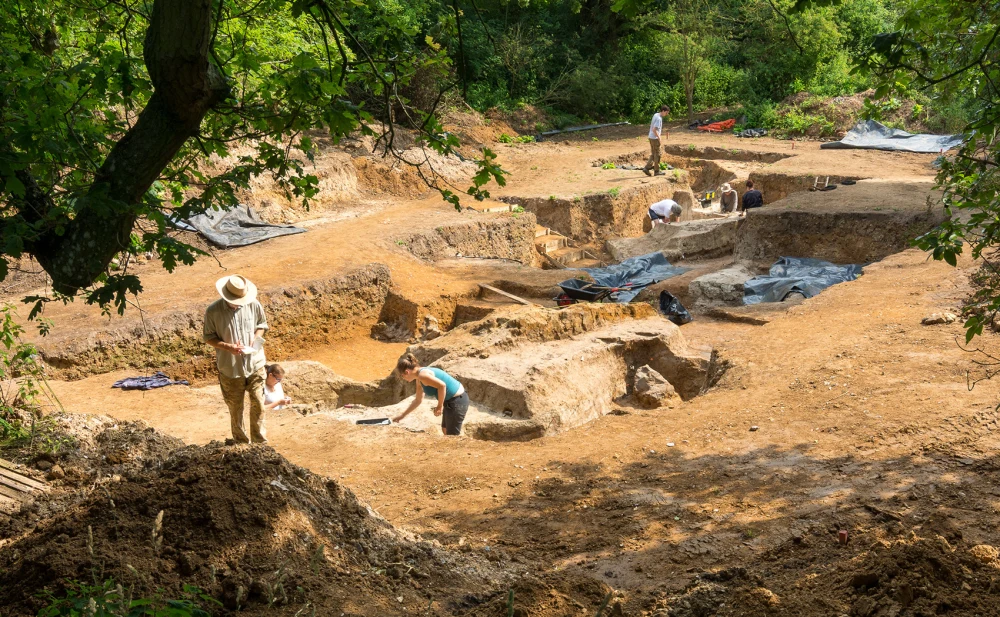
Something about a warm, flickering campfire draws in modern humans. Where did that uniquely human impulse come from? How did our ancestors learn to make fire? How long have they been making it? Researchers say they`ve uncovered new evidence in present-day England that could reshape our understanding of those questions. In a study published Wednesday in the journal Nature, the researchers describe how they found 400,000-year-old evidence of a hearth, flint tools and fragments of iron pyrite buried at what used to be a woodland and pond site where Neanderthals lived or camped. The researchers think they have sufficient evidence that human ancestors were striking the pyrite with flint to light up sparks and start blazes. The discovery, at what researchers call the Barnham site, is the oldest direct evidence of fire-making in human history, they say.
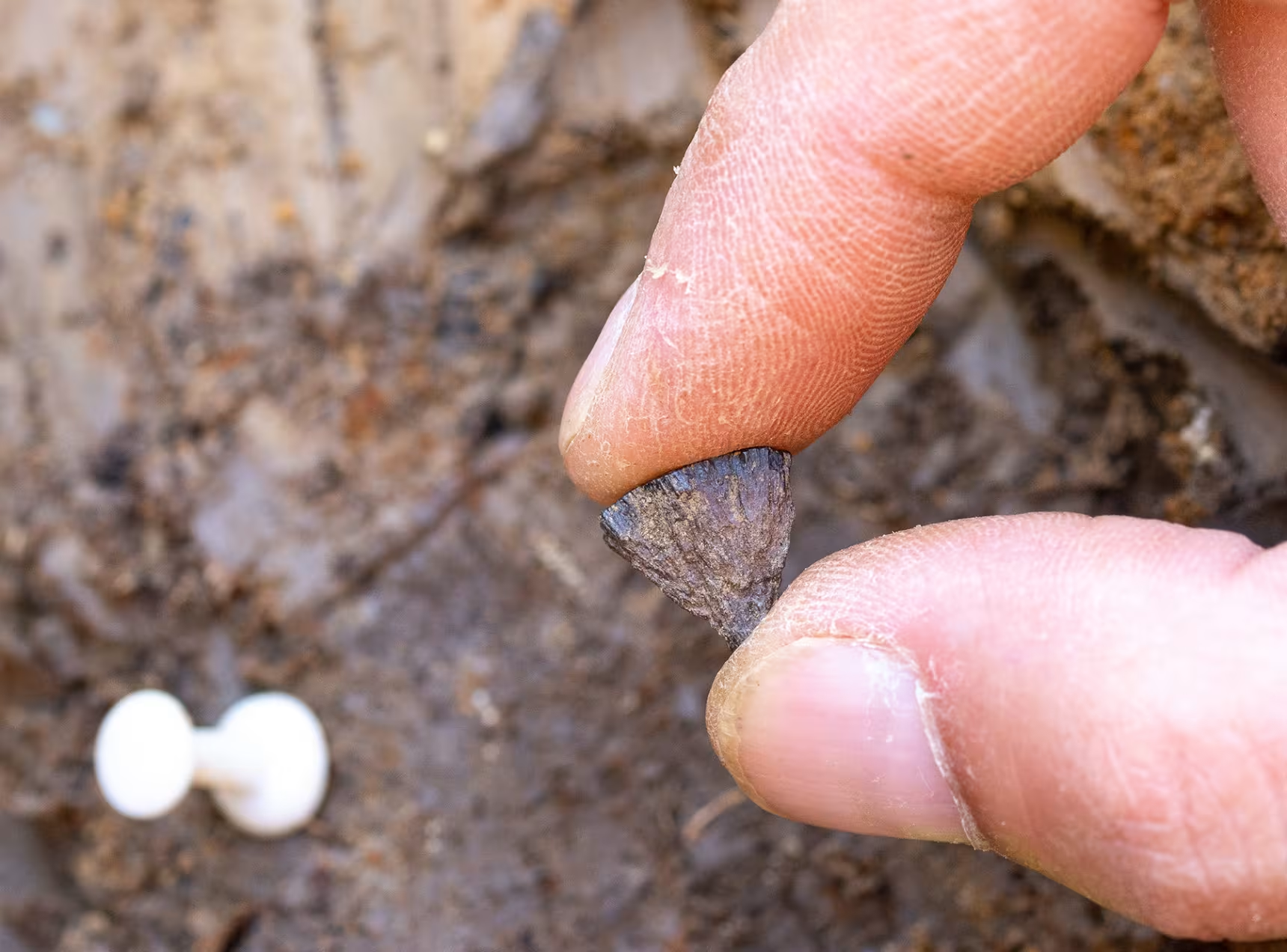
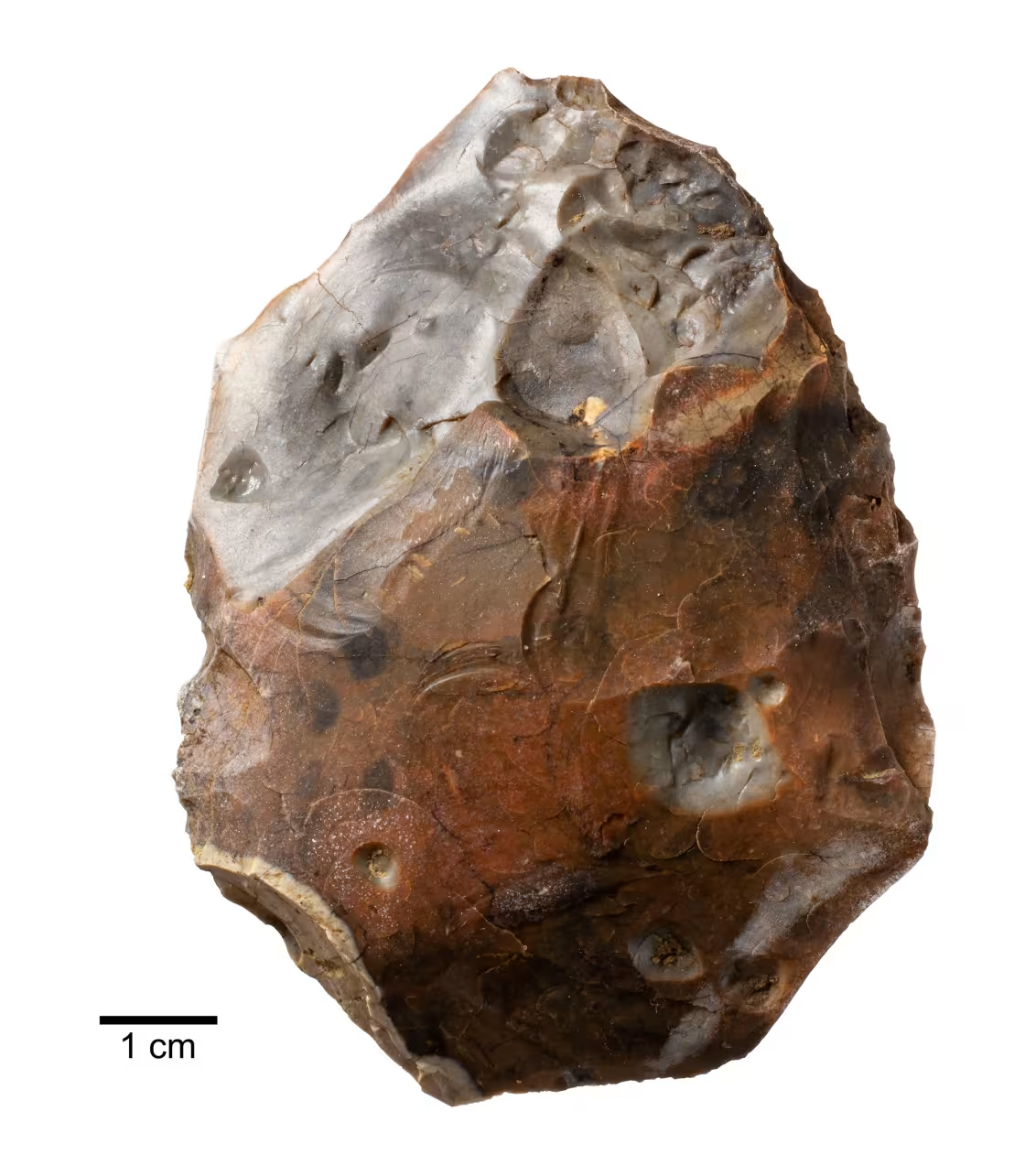
"This is a 400,000-year-old site where we have the earliest evidence of making fire, not just in Britain or Europe, but in fact anywhere else in the world," said Nick Ashton, one of the study`s authors and a curator at the British Museum. Ashton added that it pushes back the first solid evidence of fire-making by human ancestors by roughly 350,000 years. The researchers aren`t sure what these human ancestors were using the fire for - perhaps they were roasting venison, carving tools or sharing stories by firelight. When, exactly, human ancestors developed the ability to use fire is a key question that could help unlock some mysteries of human evolution and behavior. One theory is that the ability to make fire led to an increase in the brain sizes of human ancestors over evolutionary time because cooking increases caloric intake by making it easier to digest. Another idea is that the control of fire could have also helped to create a gathering space at night, which could have increased human sociality and prompted a cognitive evolution. "We know that around this time period, brain size was increasing towards its present levels," said Chris Stringer, the research leader on human evolution at the Natural History Museum London and another author of the Nature study. "Our brains are energetically expensive. They use about 20% of our body energy. So having the use of fire, having the ability to make fire, is going to help release nutrition from the food, which will help to fuel that brain, help to run it. And indeed, you know, allow the evolution of a bigger brain." Stringer said the finding does not represent the start of humans` ability to make fire, just the earliest example that researchers feel confident about. There are other, earlier suggestions that human ancestors used fire in present-day South Africa, Israel and Kenya, but those examples are the subject of some debate and interpretation. From an archaeology perspective, it`s difficult to untangle what was a wildfire or if humans had made the fire they were using. "The question is, are they collecting it from natural sources or just carrying around and curating it? Or are they making it up? On the surface, this is a very compelling case that groups knew how to make fire," said Dennis Sandgathe, a senior lecturer in the archeology department at Simon Fraser University in Canada, who was not involved in the research. In this new Nature study, the researchers point to the presence of sediments that contain fire residue, the presence of stone tools like fire-cracked flint hand axes and two small fragments of iron pyrite that geologic analysis suggests is extremely rare and was likely brought to the site by humans to make fire.
Other outside researchers were less convinced. In an email, Wil Roebroeks, a professor emeritus of paleolithic archaeology at Leiden University in the Netherlands, wrote that much of the evidence here is "circumstantial." Roebrokes noted that later Neanderthal sites, dated to around 50,000 years ago, featured flint tools that showed traces of wear that indicated they`d been struck by pyrite to make sparks - a "smoking gun" of human fire production. But, that`s not the case here. "The authors did an excellent job with their analysis of the Barnham data, but they seem to be stretching the evidence with their claim that this constitutes the ‘Earliest evidence of fire making,`" Roebroeks wrote. To human ancestors, fire would become critical for staying warm, nutrition, keeping predators away and melting resin into glue, among other uses. But Sandgathe said it was important to realize that the development of fire-making was not a linear process, but a scattered process that had fits and starts. There`s evidence that groups of human ancestors learned how to make fire and then lost that ability or stopped using fire for cultural reasons. "We have to be careful that we don`t take any one example of something ... and just project that as an indication that from this point on, everybody is making fire," Sandgathe said, adding that he had reviewed studies of nearly 100 modern hunter-gatherer groups whose ways of life were documented in detail by observers. Some groups did not have the ability to make fire. "Best guess is that fire-making was discovered by multiple groups in different regions over time, and lost, rediscovered and lost. I`m sure it`s a very complicated history."
|
 |
|
|
|
U.S
Afghanistan
Iran
International
Social
Economic
Articles |
Athletic
Read
Science
Medical
Interview
Art and Culture
Travel |
|