google.com, pub-6867310892380113, DIRECT, f08c47fec0942fa0 ** **
ExNASA head explains what could make Mars and Venus habitable                 U.S                 Afghanistan                 Iran                 International                                
ExNASA head explains what could make Mars and Venus habitable
2022/01/04-22:07

ExNASA head explains what could make Mars and Venus habitable
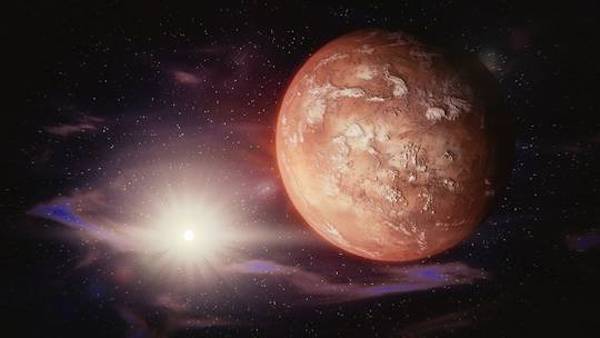
Illustration of Mars and the Sun © pixabay / GooKingSword

Former NASA director James Green says the two planets could be ‘terraformed’ using shields to protect them from the Sun

Building a magnetic shield between the Sun and Mars could protect the planet from solar particles that erode its fragile atmosphere, eventually making it terraform itself to better suit humans, NASA’s former director has said.

By blocking the charged rays and preventing them from stripping away this outer layer, more heat would be trapped, James Green told the New York Times prior to his retirement over the weekend. This will raise the planet’s temperature and pressure to a point where explorers can walk on the surface without a spacesuit and grow plants in the soil.

Stop the stripping, and the pressure is going to increase. Mars is going to start terraforming itself. That’s what we want: the planet to participate in this any way it can, Green said.

The Red Planet’s surface temperature has been measured at minus 62 degrees Celsius, while its atmosphere is around 100 times thinner than on Earth. Calling his idea doable, Green said there were several scenarios on constructing the magnetic shield and suggested that Venus could be similarly geoengineered by building a physical shield that reflects light, bringing the temperature down.

  The first level of terraforming is at 60 millibars of atmospheric pressure, a factor of 10 from where we are now. That’s called the Armstrong limit, where your blood doesn’t boil if you walked out on the surface.

The former NASA head has been working on the shield proposal since at least 2017, when he presented it during a talk at the NASA Planetary Science Vision 2050 Workshop. That presentation featured simulations and models predicting that the technology could return one-seventh of the ancient ocean to Mars by freeing frozen water at the planet’s polar cap.

The solar system is ours, let’s take it. That of course includes Mars, and for humans to be able to explore Mars, together, with us doing science, we need a better environment, he had said at the time, suggesting the climate could be stabilized in a matter of years.

However, Green told the New York Times that his ideas might not be well received by scientists, since the planetary community does not like the idea of terraforming anything.


#Mars                #NASA                #Space exploration               
ExNASA head explains what could make Mars and Venus habitable
American AI
California launches investigation into xAI and Grok over sexualized AI images
ExNASA head explains what could make Mars and Venus habitable
American AI
International pressure builds on X and Musk over Grok deepfakes of women and children
ExNASA head explains what could make Mars and Venus habitable
WhatsApp
Former Trump adviser Dina Powell McCormick joins Meta as president and vice chairman
ExNASA head explains what could make Mars and Venus habitable
American AI
Senators urged Apple and Google to remove Musk’s X and Grok from app stores over sexual deepfakes
ExNASA head explains what could make Mars and Venus habitable
American AI
Elon Musk`s X limits some sexual deepfakes after backlash, but Grok will still make the images
ExNASA head explains what could make Mars and Venus habitable
space
NASA to bring astronauts home from space station early due to a medical issue
ExNASA head explains what could make Mars and Venus habitable
American AI
Dark web users cite Grok as tool for making `criminal imagery` of kids, UK watchdog says
ExNASA head explains what could make Mars and Venus habitable
American AI
The mother of one of Elon Musk`s children says his AI bot won`t stop creating sexualized images of her
ExNASA head explains what could make Mars and Venus habitable
Tech
Hyundai and Boston Dynamics unveil humanoid robot Atlas at CES
ExNASA head explains what could make Mars and Venus habitable
OpenAI
OpenAI says it`s hiring a head safety executive to mitigate AI risks
ExNASA head explains what could make Mars and Venus habitable
iran space activities
Iran launches three remote sensing satellites on Russian Soyuz rocket
ExNASA head explains what could make Mars and Venus habitable
AI
An AI pioneer says the technology is `limited` and won`t replace humans anytime soon
ExNASA head explains what could make Mars and Venus habitable
Satellite
Iran plans launch of its heaviest ever satellite on Dec 28
ExNASA head explains what could make Mars and Venus habitable
Tech
Top tech gadgets of 2025
ExNASA head explains what could make Mars and Venus habitable
Michaela Benthaus
Paraplegic engineer becomes first wheelchair user to float in space
ExNASA head explains what could make Mars and Venus habitable
NASA
NASA`s new leader makes his priorities clear on day one
ExNASA head explains what could make Mars and Venus habitable
AI
AI Could Interview You for Your Next Job. Here’s What You Need to Know
ExNASA head explains what could make Mars and Venus habitable
U.S
Afghanistan
Iran
International
Social
Economic
Articles
Athletic
Read
Science
Medical
Interview
Art and Culture
Travel
ExNASA head explains what could make Mars and Venus habitable
          
@ 2025 Ansar Press
ExNASA head explains what could make Mars and Venus habitable