 |
U.S Afghanistan Iran International |
 |
 |
|
Taliban Quietly Revoke Media Licenses, Taking a New Step in the Systematic Elimination of Independent Afghan Media
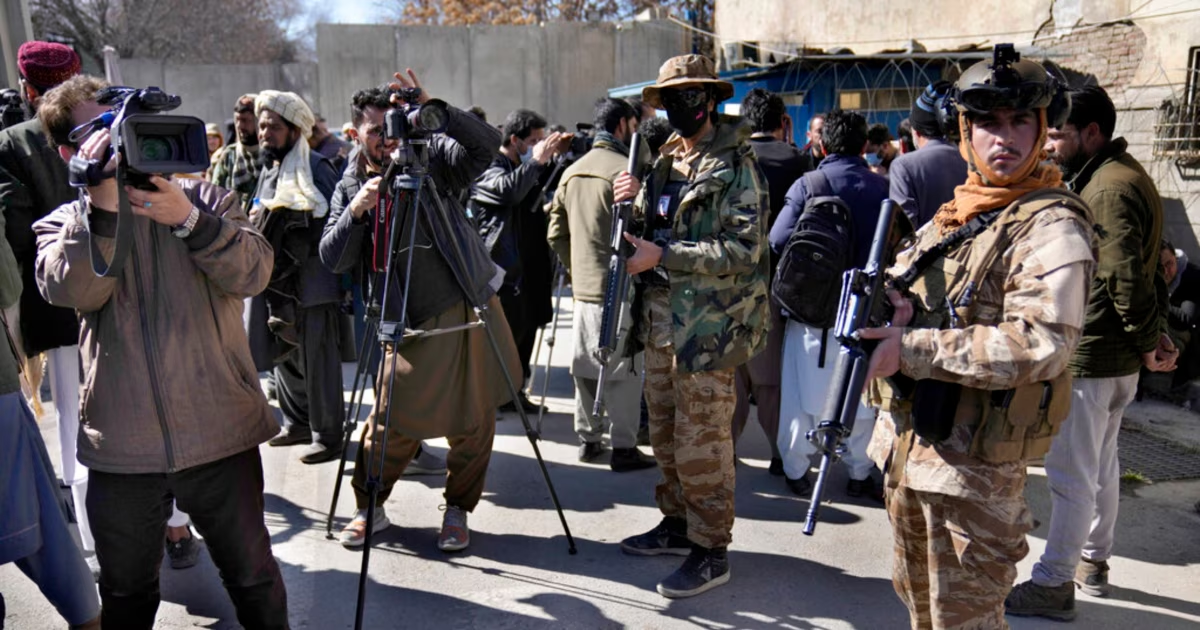
In a silence broken only by the crack of the whip and censored directives, the Taliban regime on Monday took another calculated step in the orderly and systematic dismantling of Afghanistan`s independent media space by announcing the revocation of licenses for six media organizations-without disclosing their names, the precise reasons, or offering any opportunity for defense. According to AnsarPress, the new decision by the Taliban`s Ministry of Information and Culture, coupled with the absence of any identifying details, has intensified serious concerns about the extinction of independent journalism in Afghanistan. On Monday, 6 Dalwa, the Ministry announced that it had revoked the licenses of several media outlets on the grounds of "unprofessional activity" and the "misuse of journalists` names," yet it failed to name either the outlets whose licenses were revoked or those whose licenses were renewed. An Ambiguous Decision in a Darkened Media Environment According to the Ministry`s official statement, the license revocations followed the receipt of unspecified "complaints." However, neither the source nor the nature of these complaints-nor the criteria used to assess "unprofessional" conduct-were disclosed. This lack of transparency transforms what might have been an administrative measure into a political instrument for further suppressing the media. The Taliban also claimed to have renewed the licenses of three media organizations, but again provided no names. These opaque decisions have created a climate of fear and uncertainty among the remaining media outlets in Afghanistan, pushing journalists toward abandoning the profession or resorting to self-censorship. Collaboration With Taliban Intelligence Since the Taliban returned to power in August 2021, Afghanistan`s media landscape has been profoundly affected. More than 200 independent print and broadcast outlets have shut down. Hundreds of journalists-particularly women-have been forced out of the profession. Under increasingly restrictive content policies, stringent directives have been issued governing news coverage, women`s participation in media, and even journalists` attire. Only media outlets aligned with Taliban policies have been able to continue operating inside Afghanistan. Over time, this has revealed the emergence of "affiliated media"-outlets that not only comply with Taliban directives but have also allegedly played roles in the detention of, or conspiracies against, their fellow journalists. Sources say some active media organizations cooperate with the Taliban`s intelligence apparatus, including by providing information on independent figures active in civil society, politics, and the media. International organizations-including Reporters Without Borders (RSF), the Committee to Protect Journalists (CPJ), and UNESCO-have previously warned that Afghanistan has become one of the most dangerous countries in the world for media work. In RSF`s 2025 World Press Freedom Index, Afghanistan ranks 179th out of 180 countries-just one place above North Korea.
|
 |
|
|
|
U.S
Afghanistan
Iran
International
Social
Economic
Articles |
Athletic
Read
Science
Medical
Interview
Art and Culture
Travel |
|