 |
U.S Afghanistan Iran International |
 |
 |
|
Sudan: The Forgotten War
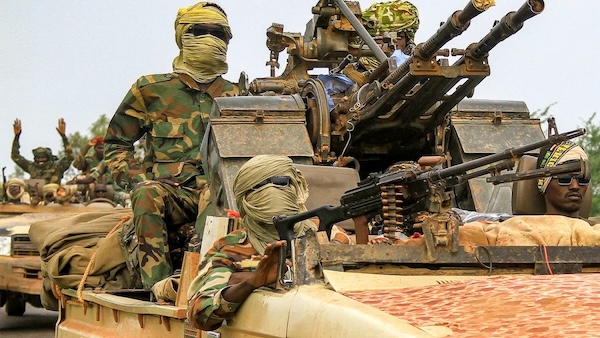
While the home crisis in Sudan and the civil war between the army and the Rapid Support Forces (RSF) still take victims in this important African country and the humanitarian situation grows critical for millions of war refugees, the new round of international efforts to work out a ceasefire plan in recent days ended fruitlessly, leaving the battleground to decide where the country heads, a vicious circle that brings about nothing but killing, poverty, and displacement for a nation disappointed with the outcomes of the 2018 revolution that toppled long-ruling leader Omar al-Bashir. Geneva talks, failed in advance Since the beginning of the military conflict, several rounds of political negotiations to stop the war have been held in Jeddah, Djibouti, Addis Ababa, Manama and Cairo, and now these negotiations have reached the Geneva stop. This round of negotiations was held without the warring parties and only with participation of international mediators, including the US, Switzerland, Saudi Arabia, the UAE, Egypt, the United Nations, and African countries. According to the UN special envoy to Sudan, Tom Perriello, this round of talks focused on commitment of the two sides to enforcement of the Jeddah agreement obligations, respect to the humanitarian rules, facilitation of aid delivery to the war-ravaged regions, and end to the armed fighting. Before the start of negotiations, the army had requested the implementation of the terms of the Jeddah agreement of May 2023 as a precondition for participation in this round of negotiations. However, the American delegation’s efforts to persuade the government to attend the Geneva meeting were unsuccessful. On August 9, Sudan’s Sovereignty Council (SSC) headed by General Abdel Fattah al-Burhan, sent a delegation to Jeddah to negotiate with American mediators to conduct initial talks to review the conditions for attending the Geneva meeting. One of the main conditions of this delegation was to accept the request to restore the control of the cities captured during the war by RSF. The Jeddah deal, which was inked one month after eruption of the bloody clashes in April 2023, was the most important agreement between the army and the RSF led by Mohammad Hamdan Dagalo. This agreement, signed to contain the scope of the war and reduce damage to civilians, includes terms such as avoiding and minimizing damage to civilians, not hindering their freedom of movement to leave conflict or besieged areas, not employing children and refraining from all types of torture. This unenforced agreement, could not achieve its goals in the long term, and in fact, it remained more of a political statement than an executive agreement. Now, the government under the control of the army sees its military situation as stable and favorable and considers the Geneva talks a trap set by the US of America and the UAE to undo its gains and help the rebels’ improve their situation on the ground. The SSC under the leadership of General al-Burhan, who calls himself the head of the only legitimate government in this country, considers accepting negotiations with the RSF in the current situation as a privilege for this force that helps boost its political position at the domestic and international levels and therefore is not interested to sit at the negotiating table with them. Also, Alex de Waal, the director of the World Peace Foundation, believes that the SSC is an incoherent coalition whose members have not agreed on their war goals, and therefore al-Burhan is under pressure from them not to negotiate. Another reason for the failure of political processes such as the Jeddah process, the initiative of African countries and now the Geneva talks is the broad geopolitics of Sudanese conflict, which has complicated the resolution of the crisis. According to reports, Egypt and some other countries from West Asia have sent weapons and military equipment to the SSC, and on the other side, the RSF have received military support from Emirates and Russia. Now the SSC insists that it will not participate in any peace meeting in which the UAE is present. This is while the UAE was invited as an observer in the Geneva negotiations. A recently released Amnesty International report provides extensive evidence that a 2004 UN arms embargo on Sudan’s Darfur region, much of which is controlled by the RSF, has been consistently violated throughout the conflict. According to Amnesty International, fighters on both sides of the conflict use Turkish-made weapons. The Amnesty International report also claims that weapons coming from Serbia, Yemen and China have been used in the conflict. What are the humanitarian consequences of the civil war? At present, from 18 provinces, only 3 have not been directly affected by war. The human toll is staggering. Forecasting Armed Conflict for Prevention, which collects information on armed conflicts, said that so far, about 16,650 people have been killed in this conflict and more than 11 million people have been displaced, of which 2.1 million people have fled to neighboring countries. The largest regional spillover of the crisis has been so far in Chad, where large numbers of refugees are fleeing, particularly from Darfur. There are also concerns that Eritrea and Ethiopia could become embroiled in the conflict, as local militia organizations in Darfur potentially draw a complex battlefield. The UN had warned about a catastrophic humanitarian crisis in Sudan, adding that 26 million people, or about half of the population, are facing acute hunger. Trade, agriculture, and local markets have been disrupted, and food stocks have run out. In the meantime, aid groups are facing severe challenges to reach the needy populations. Often, fighters refuse to open roads for aid groups, and civilians have no choice but to feeding on leaves and roots of trees and plants. The Integrated Food Security Phase Classification says that more than 750,000 people are on the brink of starvation. These are not just numbers, but represent the suffering and despair of millions of people. In the meantime, each of the warring sides are accused of committing substantial war crimes, including rape, torture, and killing of civilians. The UN labels Sudan conflict a forgotten crisis and calls for immediate ceasefire between the two warring parties as the only way to steer clear of expansion of famine in this North African country.
|
 |
|
|
U.S
Afghanistan
Iran
International
Social
Economic
Articles |
Athletic
Read
Science
Medical
Interview
Art and Culture
Travel |
|