 |
U.S Afghanistan Iran International |
 |
 |
|
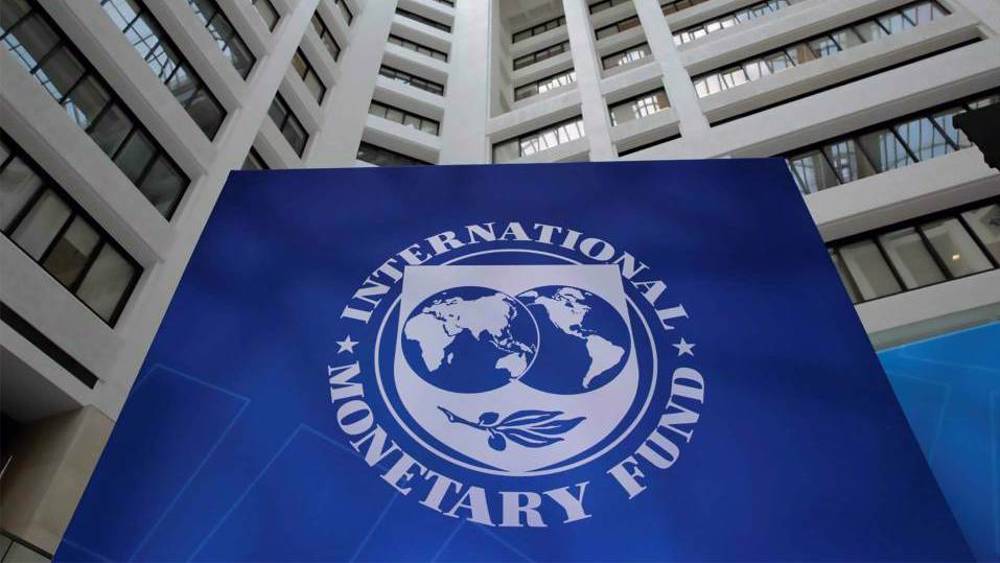
Global economy at risk of recession if war against Iran persists: IMF
The global economy is at risk of recession if the United States-Israeli war of aggression against Iran continues and high energy prices persist, the International Monetary Fund (IMF) has warned. "This would mean a close call for a global recession, something that has happened only four times since 1980," the report stated, noting the Covid-19 pandemic as the most recent instance. Energy prices have surged since United States and Israel launched a large-scale, unprovoked war of aggression against Iran on February 28, assassinating Leader of the Islamic Revolution Ayatollah Seyyed Ali Khamenei and several high-ranking military commanders and killing thousands of civilians. Iran responded by waves of missile and drone strikes against US and Israeli assets across the region. It also restricted the Strait of Hormuz to oil and gas tankers affiliated with the US and Israel or cooperating states. "Once again, the global economy is threatened with being thrown off course, this time by the outbreak of war in the Middle East at the end of February 2026," the IMF added. The International body warned that the most severe conditions could push oil prices to an average of $110 per barrel this year and to $125 in 2027. Under these assumptions, global inflation could rise to 6% next year, forcing central banks to raise interest rates further to rein in price hikes. IMF chief economist Pierre-Olivier Gourinchas said a prolonged conflict would fuel spiraling inflation, increase unemployment and trigger food insecurity in many countries. He warned that even if the conflict ended today, the shock to global oil supply would be comparable to the 1970s oil crisis, when Arab producers imposed an embargo on countries supporting Israel during the Arab-Israeli war. Oil prices, which had risen close to $120 per barrel at the height of the aggression, have since eased, with a barrel of crude costing $98.85 on Tuesday. The IMF noted that if tensions in West Asia subside in the coming weeks, and energy production and exports from the Persian Gulf begin to normalize by mid-year, global growth is projected to ease to 3.1% in 2026. That is slightly below its earlier forecast of 3.3%, while the projection for 2027 remains unchanged at 3.2%. Forty days into the US-Israeli war of aggression, a Pakistan-brokered ceasefire came into effect. However, the first round of Tehran-Washington negotiations in Islamabad collapsed after the American delegation made excessive demands and repeatedly shifted its positions. Shortly afterward, US President Donald Trump announced a naval "blockade" of the Strait of Hormuz, and authorized US forces to intercept vessels that had paid tolls to Iran. The US military said the "blockade" took effect on Monday at 14:00 GMT, further escalating the situation. In response, Iran warned that it would respond decisively and with force to any acts of provocation by the US and its allies in the strategic waterway.
Readers comments
You are the first person to comment on this article. Comments are displayed after verification. |
|
|
Ansar Press; Free and independent with impartial reports from the world at the service of the people |
U.S
Afghanistan
Iran
International
Social
Economic
Articles |
Athletic
Read
Science
Medical
Interview
Art and Culture
Travel |
About Us
Contact Us
Advertise with Us |