 |
U.S Afghanistan Iran International |
 |
 |
|
UAE in Africa: Rise of Arab Neo-imperialist Power Worrisome to Traditional Powers
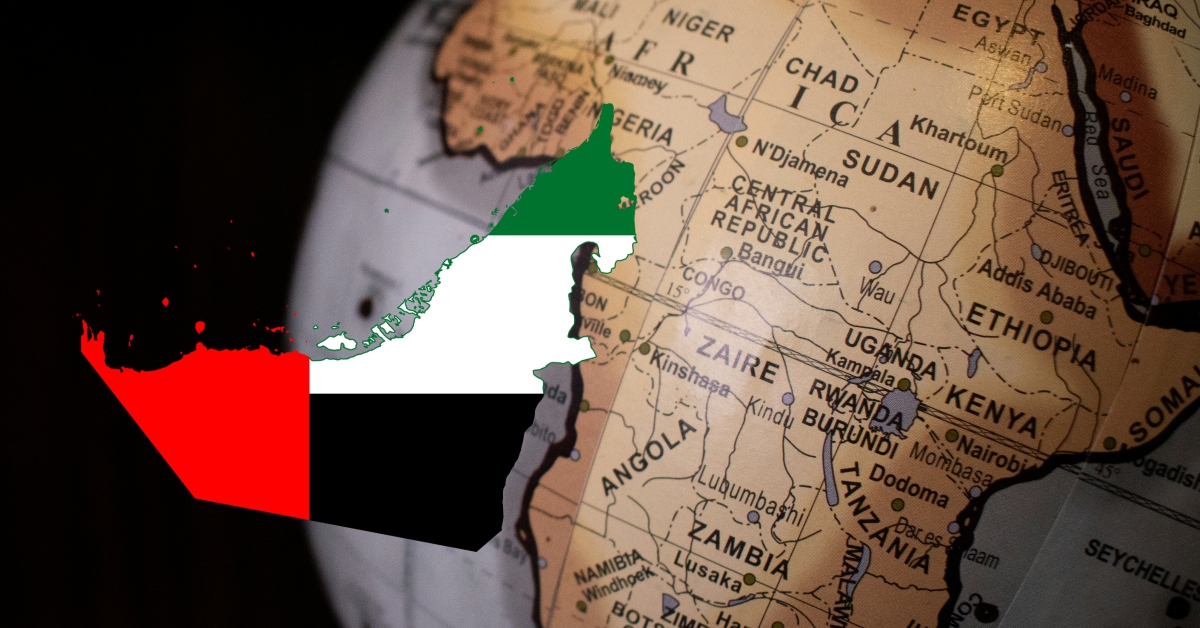
In recent months, verbal and media tensions between Algeria and the UAE have gone beyond normal levels, signaling a deep geopolitical competition in North Africa and the Sahel region. What started as media attacks and identity accusations was in fact a reflection of a confrontation of two different approaches to regional order. On one side stands Algeria, which views itself as the inheritor of an anti-colonial, non-aligned tradition. Its geopolitical legitimacy is built on supporting liberation movements, championing the Palestinian cause, and staunchly opposing normalization with Israel. On the other side is the UAE, which over the past decade has transformed into a pragmatic, economy-driven, and interventionist power, actively working to build a trans-regional network of economic and military influence. The root of their tension is a direct clash of strategic interests. Algeria sees North Africa and the Sahel as its natural sphere of influence, a region where stability is inextricably linked to its own national security. The UAE, however, has increasingly entered this very arena since the mid-2010s. It is investing in ports, partnering in defense industries, training security forces, and even backing non-state military actors in conflict zones. From Algeria`s perspective, this active engagement is far more than routine economic cooperation. It fuels suspicions of a project to reshape the regional order, a new power structure where smaller but wealthier states leverage capital and security networks to wield influence far exceeding their geographic or demographic size. Disagreements over key regional cases, such as Libya and Western Sahara, have only deepened this divide. In the Libyan crisis, Algeria backed the political process of the National Salvation Government, while the UAE backed General Khalifa Haftar. In the Palestinian case, the Emirati normalization with h Israel under what is called by the West Abraham Accords run counter to the red line of the Algerian foreign policy. Additionally, media reports alleging the involvement of Emirati-linked networks in Algeria`s ethnic and identity debates have inflamed domestic sensitivities, bringing tensions into the public sphere. In essence, what now manifests as a war of words stems from Algeria`s fear of a geopolitical retreat in the face of a newly assertive power equipped with multi-layered instruments of influence. But a more fundamental question is why the UAE is focusing so intensely on Africa. The answer lies in three primary drivers: economics, security, and international standing. From an economic perspective, Africa represents both a burgeoning consumer market and a vast repository of critical resources. Through massive investments in commercial ports, logistics infrastructure, fossil and renewable energy, and the mining sector, the UAE is securing its role in global supply chains. Companies like DP World and AD Ports Group have secured concessions to develop or manage major ports in areas such as Egypt, Angola, the Democratic Republic of Congo, Tanzania, Senegal, Mozambique, and Somaliland. This creates a network effectively spanning maritime corridors from the Mediterranean to the Indian Ocean. From a security aspect, the UAE has found out that protection of its investments is impossible without indirect military presence and defense capacity building in the host countries. That is why, since 2010,the Arab country made military training and security cooperation as one of the main tools of its foreign policy. Obvious examples include training Somalian forces, funding and equipping the Puntland coast guard against piracy in the Gulf of Aden, training Ethiopian presidential guard, foundation of the Mohammed bin Zayed Defense College in Mauritania for training G5 countries` officers in the Sahel region, and deploying training teams to Chad and Mali. Over the past eight years, the UAE has signed at least eight counter-terror agreements with African countries and has regularly involved in multilateral training programs. From a geopolitical perspective, the UAE is leveraging these moves to transform itself from a peripheral Persian Gulf state into a mid-tier global power, an actor capable of protecting sea lanes, vital resources, and trade routes on a scale far beyond its immediate neighborhood. Within this framework, establishing a flexible network of military footholds in Africa becomes critical. The Asabba base in Eritrea, which played a key logistical role in supporting the Yemen campaign, Al Khadim base in eastern Libya, used for drone operations backing Haftar`s forces, the use of Sidi Barrani in Egypt, and facilities established in Bossaso in Puntland or Kismayo on the Somali coast, all exemplify this flexible, mission-oriented strategy. Unlike traditional permanent bases, this model allows for rapid scaling up or down of military presence. Furthermore, the UAE has turned to defense industry cooperation and arms sales as a tool for cementing alliances. Deals such as the sale of 71-meter corvettes to the Angolan navy, delivery of armored vehicles to the Democratic Republic of Congo to defend the city of Goma, light armored vehicle sales to Senegal, and the establishment of a joint armored vehicle production line in Uganda are key examples. These transactions not only boost economic returns but also create deeper security dependencies with host governments. The UAE`s primary areas of involvement can be summarized into four key vectors: ports and maritime logistics, military training and capacity-building, defense industry cooperation, and covert participation in regional conflicts. In Somalia, the UAE trains government forces and conducted its first drone strike against al-Shabaab positions in the Galguduud region. In Sudan, UN reports confirm that the Um Jaras base in Chad has become a channel for logistical support to the Rapid Support Forces (RSF). Its role in shaping the military balance on the ground in Libya and Ethiopia has also been undeniable. The Emirati methods and tools of influence are combination of soft economic power and hard security force, major investment in infrastructural projects, giving loans and funding, military training, arms sales, abs providing logistics and drone support in critical conditions. This combination has enabled Abu Dhabi to ensure real impact on the field equations without inflicting the political costs of an open, large-scale military involvement. The consequences of this new actor`s presence for Africa`s geopolitical order are also dual-edged. On one hand, by injecting financial resources and training capacity into countries grappling with pervasive threats like terrorism and piracy, the UAE has helped bolster the security capabilities of its partner governments. On the other hand, this very pattern has made great-power competition in Africa more multipolar. Alongside traditional players like France, the US, China, and Russia, a small but wealthy power has now entered the arena, challenging the established rules of influence. This heightened rivalry risks fueling greater instability, as weaker states may be pushed toward expedient alliances and increased militarization in their quest for external patronage. It is within this context that Algeria`s sharp reaction becomes more understandable. What appears on the surface as a media war is, at its core, a reflection of the fear of a power shift in its own backyard, a transition from an order dominated by classical powers or large regional players, to one where states like the UAE, through a network of ports, bases, and security agreements, can play a decisive role. Finally, we can suggest that the UAE has stepped in a fundamental strategic shift; one whose signs are unmistakable. A country that before this was known for its petrodollars, skyscrapers, and malls is now on its way to becoming a neo-imperialist actor. Actually it is a reproduction of the 18th and 19th century formula: First establish economic interests, then take them under your control, and then protect them at any cost, even using force.
Readers comments
You are the first person to comment on this article. Comments are displayed after verification. |
|
Ansar Press; Free and independent with impartial reports from the world at the service of the people |
U.S
Afghanistan
Iran
International
Social
Economic
Articles |
Athletic
Read
Science
Medical
Interview
Art and Culture
Travel |
About Us
Contact Us
Advertise with Us |