 |
U.S Afghanistan Iran International |
 |
 |
|
Details of GhaniAbdullah Political Agreement
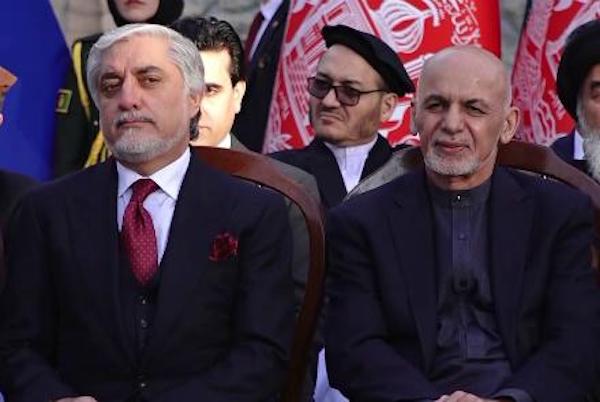
TOLOnews has obtained a copy of the political agreement between President Ashraf Ghani and his political opponent Abdullah Abdullah that outlines the structure of a future government in which each side will have a 50 percent share.
The five-page agreement-- originally in Dari-- describes the government role given to Abdullah Abdullah and specifies his authorities and privileges and areas where his team will participate. The two sides have agreed in principle on the plan, according to Abdullah and Ghani’s aides, but discussions are still underway about details. Based on the agreement, the High Council of Government will be established to ensure political consensus in the country. Political leaders and national figures will be members. This council, according to the agreement, will consult with the president on important national matters. Another aspect of the plan is the establishment of the High Council of National Reconciliation led by Abdullah Abdullah, from which he can issue executive orders. The council will have five deputies from the two teams. The council members will be selected by the director in consultation with the president, political leaders, people from the two sides, speakers of the parliament houses and the civil society and elites, according to the agreement. Based on the agreement, Abdullah will lead the peace process, the meetings of the reconciliation council, and he will appoint its members and employees, including the employees of the State Ministry for Peace Affairs. The agreement also mentions reforms in the electoral process, which include changing the system of the elections, the holding of provincial council and district council elections, the use of the biometric system, and amending the law on political parties in accordance with electoral reforms. The agreement mentions that the provincial governors will be appointed based on a rule agreed upon by both sides. And appointments and removals should be made based on justifiable reasons, and new appointees should be made based on merit and legal conditions.
Readers comments
You are the first person to comment on this article. Comments are displayed after verification. |
|
|
Ansar Press; Free and independent with impartial reports from the world at the service of the people |
U.S
Afghanistan
Iran
International
Social
Economic
Articles |
Athletic
Read
Science
Medical
Interview
Art and Culture
Travel |
About Us
Contact Us
Advertise with Us |